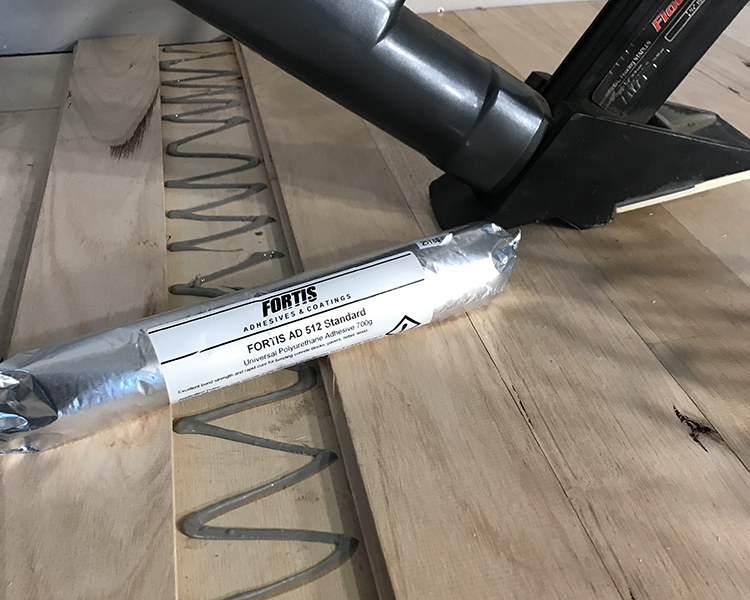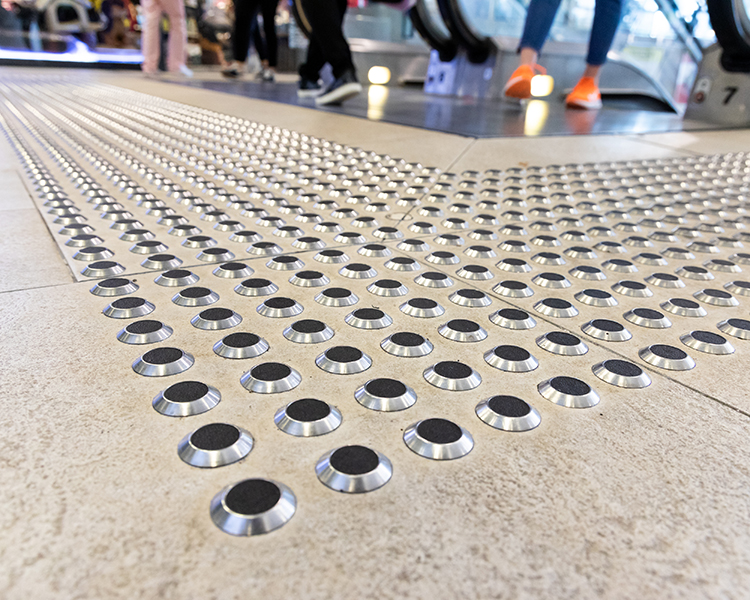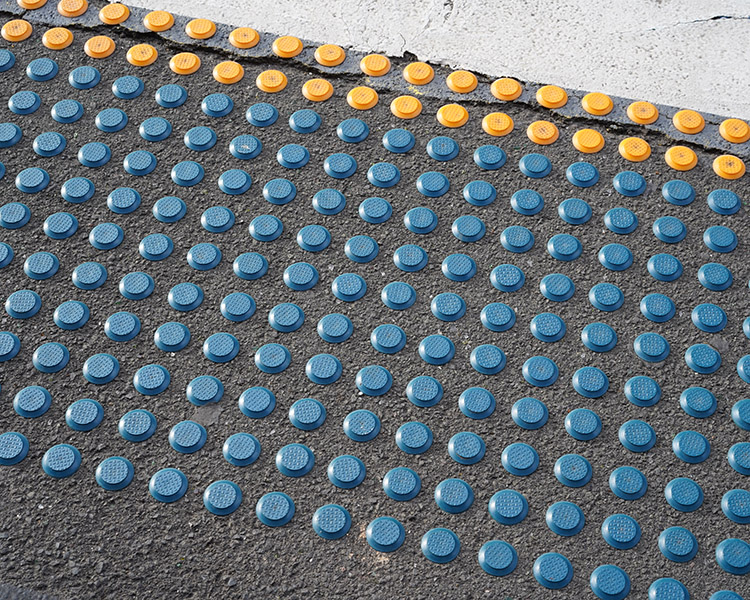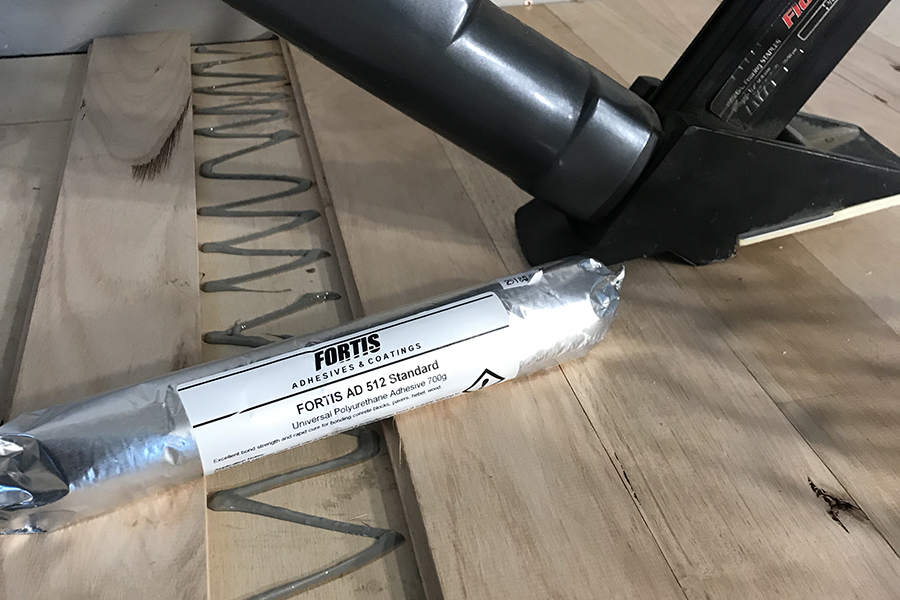
Fortis AD512 is a high-strength adhesive for traffic tactiles, timber flooring, Yellow Tongue, rubber underlay and general construction bonding. Its strong wet grab and ability to bond porous to non-porous materials make it ideal for demanding flooring and installation applications.
Information | Applications | Specifications | Downloads | FAQs
Fortis AD512 is a single-component, moisture-curing polyurethane adhesive designed for flooring, tactile installation and general construction bonding.
The adhesive provides excellent bond strength and wet grab across a wide range of porous and non-porous substrates. Typical applications include timber floorboards, strip flooring, Yellow Tongue flooring, sound-insulating rubber, traffic control tactiles, concrete block and timber-to-steel bonding.
AD512 is low odour and can be applied by bead or notched trowel depending on the installation. It can also be used on slightly damp suitable surfaces, making it particularly useful for construction and flooring applications where substrate conditions can vary.
The adhesive expands slightly during cure. Flooring, tactiles and other bonded materials must therefore be correctly bedded and suitably weighted, clamped or fastened during curing to maintain contact with the substrate.
Once fully cured, AD512 provides a strong, durable bond with resistance to intermittent water immersion.
Single-Component Moisture-Curing Polyurethane Adhesive
Ensure the substrate is clean, structurally sound and free from dust, oil, grease and other contaminants that may interfere with adhesion.
Puncture the end of the foil sausage and dispense Fortis AD512 as required.
For bead application, apply approximately a 6 mm diameter bead at suitable spacing to achieve approximately 80% adhesive coverage once the flooring or overlay is fully bedded.
Alternatively, apply AD512 using a suitable notched trowel. A 5 mm wide × 6 mm high V-notched trowel at approximately 25 mm centres may be used for general applications.
For thinner materials that may be affected by adhesive expansion during cure, a 3 mm wide × 3 mm high V-notched trowel at approximately 10 mm centres may be more appropriate.
Place the flooring, tactile or bonded material directly onto the prepared adhesive and minimise unnecessary sideways movement. Bed the material firmly to achieve good adhesive transfer and contact.
Remove excess adhesive or squeeze-out as required. Secure, fasten, clamp or weight the bonded material during cure to prevent movement or lifting caused by polyurethane expansion.
Refer to the current Fortis AD512 Technical Data Sheet for application rates, working time, cure requirements and substrate-specific recommendations.
Suitable substrates and applications include:
• Timber floorboards
• Strip flooring
• Yellow Tongue flooring
• Engineered timber flooring
• Sound-insulating rubber
• Rubber underlay
• Traffic control tactiles
• Concrete
• Concrete block
• Timber
• Steel
• Other suitable porous and non-porous construction substrates
Surfaces must be clean, structurally sound and free from dust, oil, grease, loose material and other contaminants that may interfere with adhesion.
Concrete and masonry substrates should be sound and properly prepared before bonding. Steel and other non-porous surfaces must be thoroughly cleaned and degreased and may require light abrasion to provide a suitable bonding surface.
AD512 can be used on slightly damp suitable substrates; however, standing water must not be present.
Always test adhesion when bonding unfamiliar, coated or difficult substrates.
700 g foil sausage, 12 × 700 g
What is Fortis AD512 used for?
Fortis AD512 is a polyurethane adhesive for timber flooring, Yellow Tongue, rubber underlay, traffic tactiles and general construction bonding.
Can AD512 be used for timber flooring?
Yes. AD512 is suitable for bonding timber floorboards, strip flooring and other suitable timber flooring systems.
Can AD512 be used to install traffic tactiles?
Yes. AD512 is suitable for bonding traffic control tactiles to correctly prepared substrates.
Can AD512 bond timber to concrete?
Yes. AD512 can bond suitable timber products to correctly prepared concrete and masonry substrates.
Can AD512 bond timber to steel?
Yes. Steel must be thoroughly cleaned, degreased and correctly prepared before applying the adhesive.
Can AD512 be applied to slightly damp surfaces?
Yes. AD512 can be used on slightly damp suitable substrates. Standing water must not be present.
Does AD512 expand while curing?
Yes. AD512 expands slightly during cure. Bonded materials should be weighted, clamped or fastened as required to maintain contact.
How is AD512 applied?
AD512 can be applied as a bead or using a suitable notched trowel depending on the application.
What is the working time of AD512?
The current specification lists a working time of approximately 30 minutes. Refer to the TDS for application conditions.
How long does AD512 take to cure?
The current specification lists an initial set of approximately 4 hours and full cure after approximately 3 days.
Fortis AD512 Technical Data Sheet
Fortis AD512 Safety Data Sheet