Your search for "resources rust-remover-gel-vs-soak-vs-concentrate" was found in 7 product ranges, 38 products, 22 resources, and 2 pages.
If you can't find what you're looking for, try a Google-powered search, or contact us.
For the flooring contractor hired to apply or repair a coating on a concrete floor, the range of tools and possible techniques available for surface preparation can be extensive. Surface preparation methods …
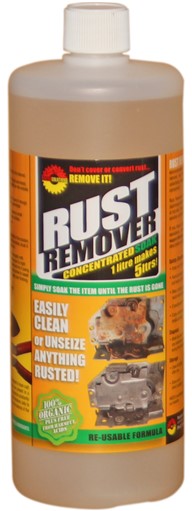
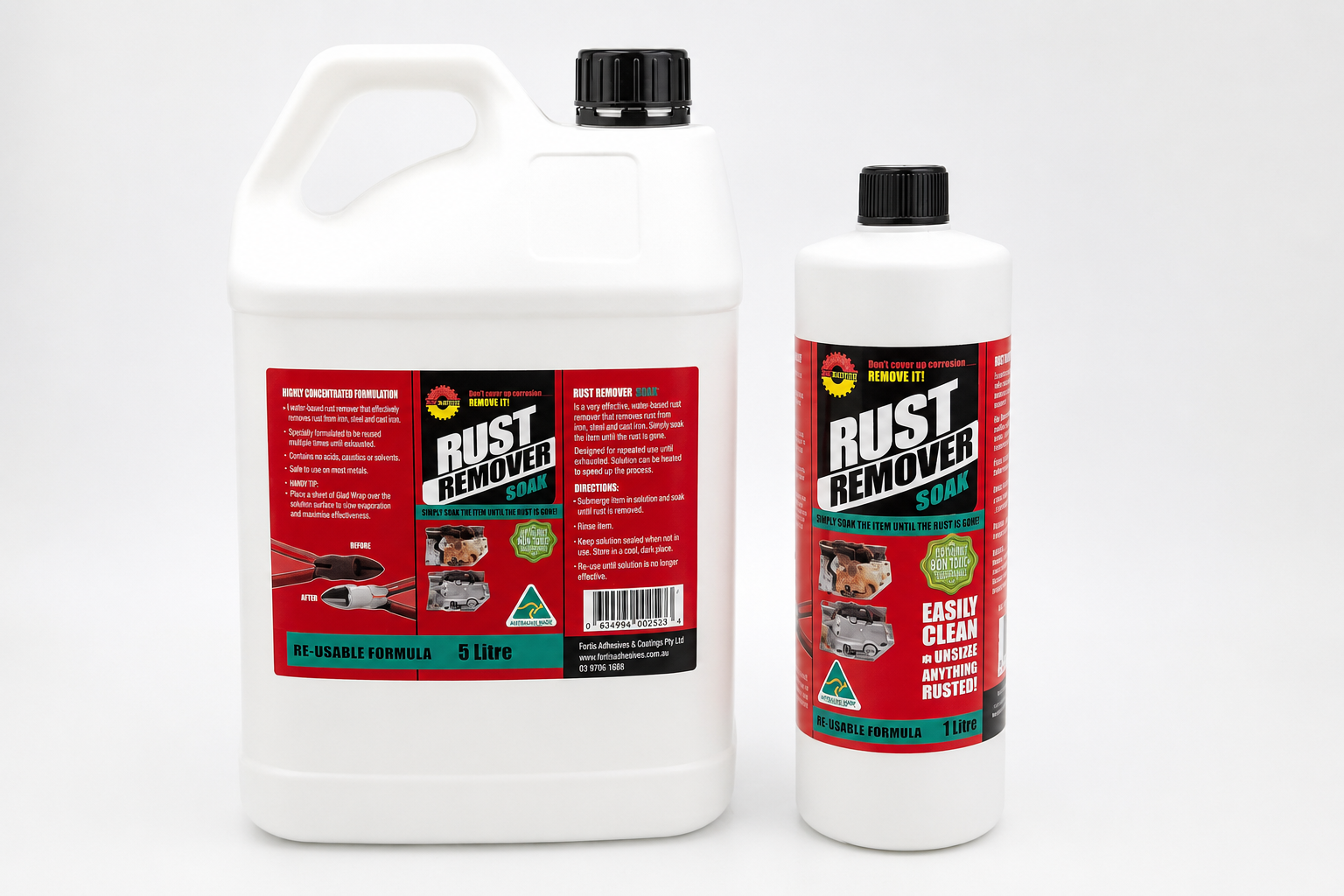
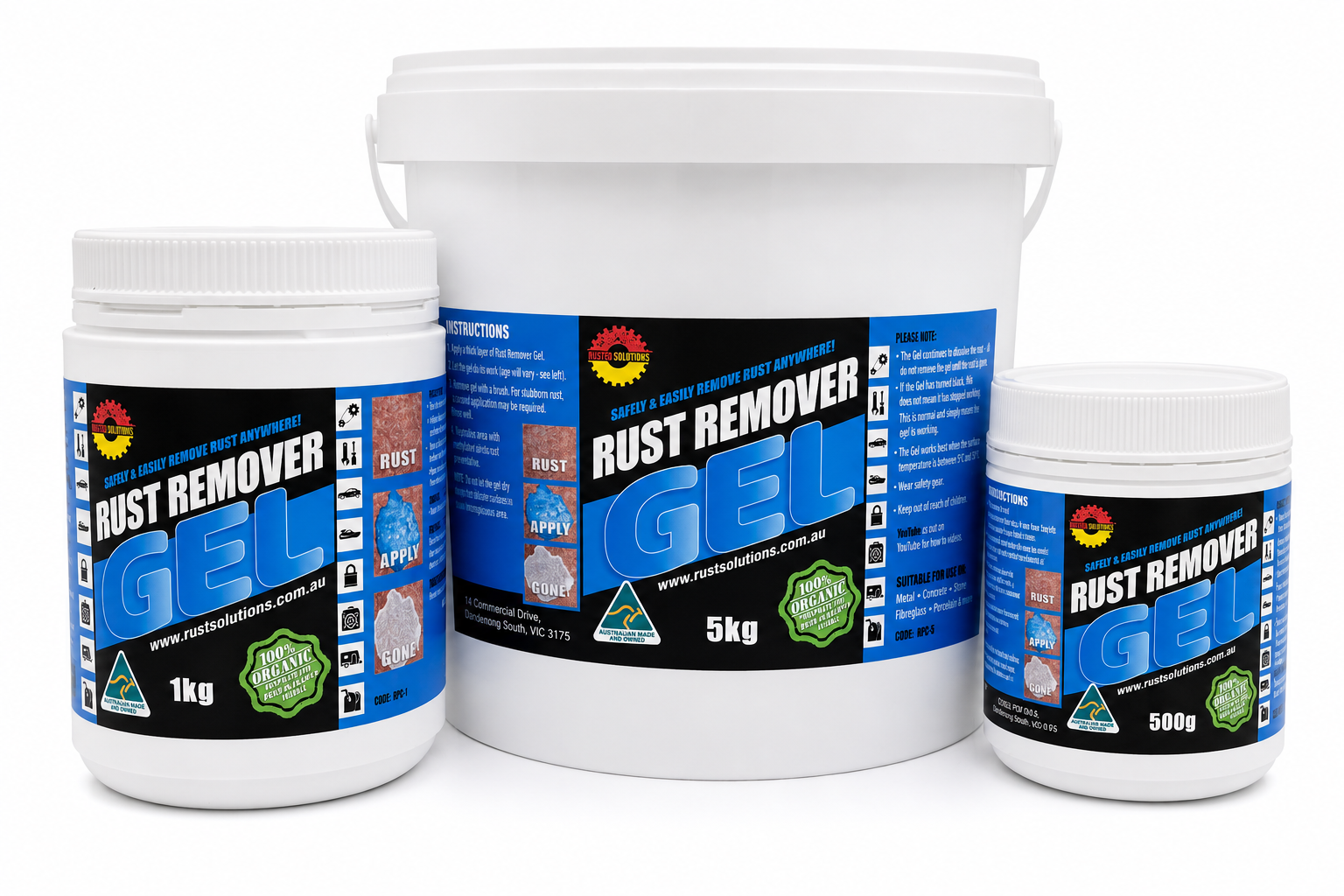
Removing rust effectively depends on the item, severity of corrosion and whether the component can be immersed. Rusted Solutions™ provides Rust Remover Gel for fixed surfaces and Rust Remover Soak for removable …
Rust remover vs rust converter—which should you use? A rust remover removes corrosion to expose the underlying metal, while a rust converter chemically reacts with remaining rust to form a converted layer …
Choosing the right industrial adhesive depends on the substrates being bonded, required bond strength, flexibility, working time, application method and service environment. Polyurethane (PU), epoxy, polyvinyl acetate (PVA) and contact adhesives use …
Adhesive strength depends on the surface beneath it. Dust, oil, moisture, oxidation, release agents and weak coatings can prevent wetting or cause the bond to separate from the material. Preparation by Material …
Choosing the correct epoxy floor primer is essential for adhesion, coating durability and long-term flooring performance. The best primer depends on the condition of the concrete, surface porosity, moisture exposure and how …
The best concrete driveway sealer depends on the type of concrete, its condition and the appearance you want to achieve. For most decorative driveways, the first decision is whether to use a …
Concrete sealer can reduce surface grip, particularly when applied to smooth concrete or when the surface is wet. However, how slippery a sealed surface becomes depends on the concrete texture, slope, type …
De-lamination of coatings can occur between the coating system and the substrate. Causes of de-lamination The possible causes for de-lamination are: Contamination Inadequate surface preparation Incompatibility 1. Contamination Contamination can be on …
Concrete cracks, control joints and expansion joints may look similar, but they serve different purposes and require different repair materials. Semi-rigid polyurea fillers are widely used in industrial floors because they cure …
Adhesive failure is usually caused by material selection, surface preparation, application or service conditions. Examining where the joint separated is the best place to begin. Identify the Failure Mode What you seeLikely …
Fortis AD5105, AD5205 and AD5405 are single-component, moisture-curing polyurethane timber adhesives for woodworking, joinery, furniture manufacture and industrial assembly. All three provide D4 water resistance, but their different working and clamping times …
Select a rust remover according to whether the component can be submerged, the area requiring treatment and the volume of solution needed. Rusted Solutions products are intended for compatible ferrous metals such …
Water-based and high-solids epoxy coatings both protect concrete floors but differ in odour, film build, application and service. “Water-based” describes the carrier, while “high-solids” describes how much coating remains after curing. A …
FORTIS PA75 and Polymarine 3026 are solvent-based polyurethane adhesives designed for bonding flexible PVC and compatible flexible materials used in inflatable, marine and industrial applications. Feature FORTIS PA75 Polymarine 3026 Adhesive Technology …
Concrete densifiers supply reactive silicate that penetrates the surface and combines with calcium hydroxide from cement hydration. This forms additional calcium silicate hydrate within the pores, increasing surface hardness, reducing dusting and …
Concrete sealers and enhancers can reduce absorption, change appearance or form a protective film. The correct treatment depends on the concrete finish, exposure, traffic and maintenance requirements. Compare the Options TreatmentResultFortis options …
Water-based and solvent-based acrylic sealers both form a protective film over concrete, but they differ in odour, appearance, application and clean-up. Choosing the right system depends on the substrate, location and finish …
Epoxy, polyurethane and polyaspartic coatings differ in curing speed, UV stability, working time and finish. Selection depends on traffic, exposure, downtime and substrate. CoatingMain strengthsTypical uses EpoxyStrong adhesion, high build and economicalGarages, …
FORTIS AD5113 and LORD® 7420 are single-component, moisture-curing polyurethane/urethane adhesives designed for industrial bonding applications. Feature FORTIS AD5113 LORD 7420 Adhesive Technology Polyurethane Urethane Components Single-component (1K) Single-component (1K) Cure Mechanism Moisture …
Concrete sealers can be broadly divided into penetrating and film-forming systems. Both can protect concrete, but they work differently and produce different appearances. The best choice depends on the substrate, exposure and …
When protecting brass, copper and other decorative metals from tarnishing and oxidation, ArmaLac™ and Incralac are two clear protective coating options available in Australia.Both are acrylic-based protective coatings, but there are differences …
Fortis Adhesives & Coatings Pty Ltd Fortis Adhesives & Coatings is an Australian-owned manufacturer specializing in high-quality adhesives and coatings. We offer a wide range of products, including adhesives, floor coatings, concrete …
Use Fortis technical resources to compare products, select suitable systems, prepare substrates and troubleshoot common application problems. Explore practical guides covering industrial adhesives, floor coatings, concrete sealers, concrete joint repair, polished concrete …